Johnson ducks whistleblower report on rushed mail-in voting overhaul
A whistleblower report warned the U.S. Postal Service dropped standard testing, troubleshooting and debugging processes for its new ballot screening tool due to pressure from the Trump administration.
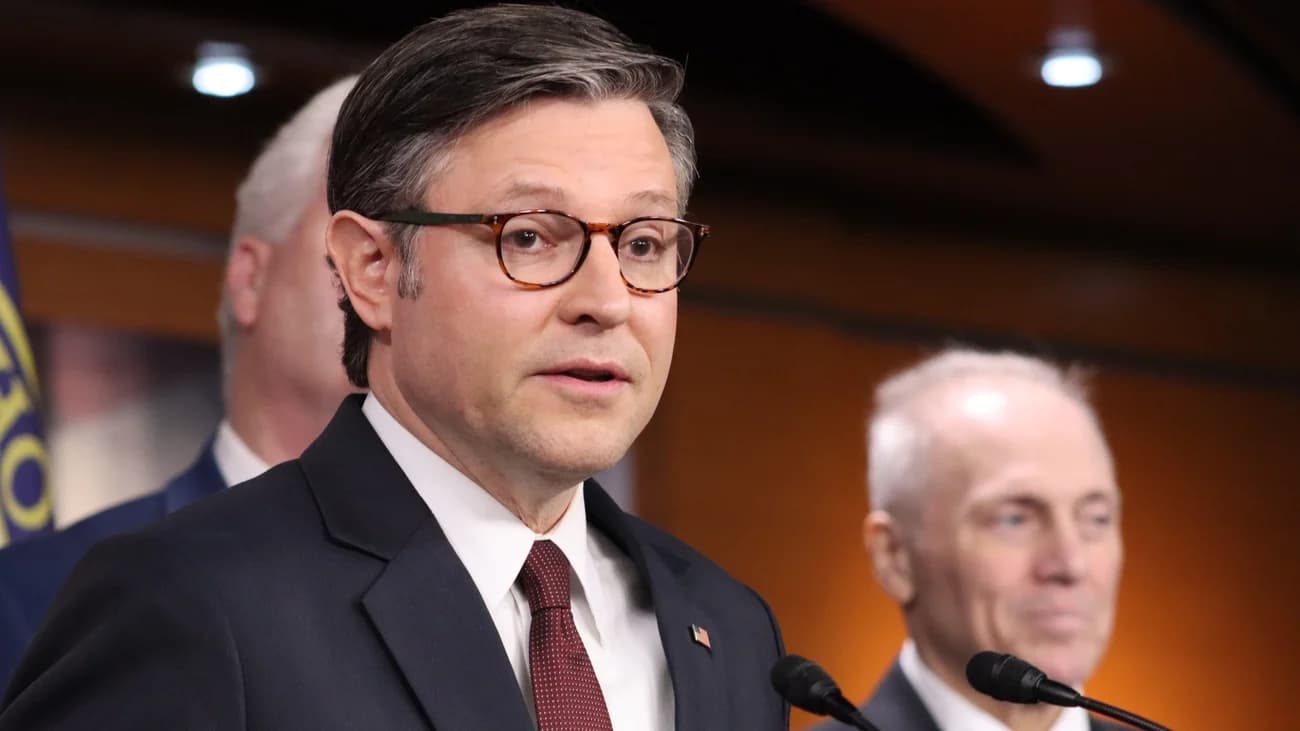
WASHINGTON (CN) — House Speaker Mike Johnson dodged questions Tuesday about an alarming new whistleblower report claiming the U.S. Postal Service undertook a "risky and haphazard" approach to implementing President Donald Trump's crackdown on mail-in voting.
And while the top House Republican said he hadn't read the disclosure — which warned the Postal Service's actions could "derail" the upcoming midterm elections — he seized the opportunity to criticize mail-in voting and offer another pitch for the president's vaunted voter ID legislation.
Writing in a letter to Postmaster General David Steiner published Tuesday morning, Connecticut Senator Richard Blumenthal said he'd received the whistleblower report he said outlined the Postal Service's "perilously rushed and potentially unlawful implementation" of Trump's March executive order aimed at restricting the use of mail-in voting.
The Democratic lawmaker said the disclosure described an "unprecedented process" featuring a new online tool for screening ballots submitted by mail from state election officials.
According to the whistleblower, the so-called "Federal Ballot Mail Portal" would be used by the Postal Service to decide whether certain ballots from state officials can be mailed to voters. But the Trump administration demanded an impossible timeframe for developing the tool, forcing the agency to drop standard testing, troubleshooting and debugging processes. Blumenthal also warned the system could disqualify large batches of mail ballots if just one can't be verified.
Further, the whistleblower report suggested the Postal Service continued to work on its ballot screening tool even after a federal judge enjoined it from implementing Trump's executive order — an apparent violation of a court order.
Asked about the disclosure during a news conference Tuesday morning, Johnson said he hadn't heard about the report "at all" but advocated for what he called the "larger matter" of election integrity.
"Ask yourself … is it a good idea to keep voting, keeping tally of the vote, counting votes a month after an election?" the House speaker told reporters. "Obviously, it opens the door for all sorts of hijinks."
Johnson contended in states such as California "they just claim to have all these new tranches of ballots" that swing election results in the days after in-person votes are cast.
"It just gives the appearance of impropriety, and it opens the door for fraud," he added. "The idea that [the Postal Service] should be involved to make sure there are valid votes being mailed and registered and cast should not be a controversial notion."
There's no evidence of widespread voter fraud stemming from mail voting. The Heritage Foundation's voter fraud database has reported fewer than 400 cases of fraudulent mail-in ballots since 2000. And the Brookings Institution last year said it found only around four cases of mail-in voting fraud out of 10 million ballots submitted between 2016 and 2022.
Senate Minority Leader Chuck Schumer said in a statement Tuesday that the U.S. mail-in voting system is "safe and secure," pointing out Trump himself has repeatedly voted by mail. He accused the president of turning the Postal Service into "a voter suppression machine."
"He knows he's failing the American people, so he's doing everything he can to rig the midterms," said the top Senate Democrat.
Johnson, meanwhile, argued on Tuesday that the possibility of voter fraud should motivate lawmakers to ensure "free and fair elections," thumping the Save America Act — the Trump administration's marquee voter identification legislation that has so far struggled to find its footing in Congress.
If made law, the proposed bill would require Americans to provide proof of citizenship when registering to vote and mandate voters display identification at polling places. The measure would also effectively end mail-in voting.
The House passed the Save America Act on four separate occasions, most recently attached to a budget reconciliation package. But the bill has so far failed to gain traction in the Senate — Republicans in the upper chamber left for August recess last month without voting on the reconciliation measure. Democrats, for their part, have staunchly opposed the legislation in both the House and Senate.
"Some of these people want to leave the avenue open for irregularity and cheating and fraud," Johnson said of Democrats. "That's the only explanation that is logical and it's shameful."
Opponents of the Save America Act argue the measure will effectively disenfranchise scores of American voters in an effort to address a problem for which there is little supporting evidence.
Since 2020, Trump has claimed the U.S. voting system is rife with fraud, arguing the presidential election he lost to former President Joe Biden was rigged against him. Federal courts have repeatedly found no evidence of voter fraud in the 2020 contest and the second Trump administration has yet to furnish any solid evidence of widespread malfeasance.
The White House over the summer released a tranche of documents that Trump said proved foreign meddling in American elections, such as efforts by the Chinese government to secure publicly available voter data. But most of the information the administration published was already well-documented by both the intelligence community and media.