Scottish Nationalists Hang On to Power, Without Authority
The Scottish National Party's former chief executive Peter Murrell has pled guilty to embezzling £400,000. While the Scottish independence movement promised deeper democracy, the SNP leadership has operated like a cartel.
The Scottish Parliament election on May 7 returned the Scottish National Party (SNP) to Holyrood for a historic fifth term in office. Bucking the anti-incumbency trend sweeping Europe, John Swinney's SNP won fifty-eight seats to begin its third consecutive decade in power.
The result, coupled with the success of left-nationalist Plaid Cymru in Wales, has raised renewed questions about the enduring unity of the British state. Even Labour's Wes Streeting is worried. "For the first time in our country's history, nationalists are in power in every corner of the United Kingdom," wrote the former health secretary as he resigned from Keir Starmer's Cabinet earlier this month.
Beneath the surface, however, the Scottish election is far more indicative of the stasis gripping the nation than it is a sign of imminent constitutional upheaval.
On a day when national turnout dropped by 10 percent, the vote share of Holyrood's three traditionally largest parties fell considerably. The Scottish Conservatives and Scottish Labour each suffered their worst defeats of the devolution era, while the SNP's share of the regional vote declined by as much as 13.1 percent. This was still an impressive return for Swinney, a career functionary who only took on the SNP leadership after a series of high-profile scandals brought his party to "the brink of collapse." The result, however, should not be read as a sure sign of Scottish-nationalist recovery.
"Scotland's party" ceded ground in disparate directions across the country. In gentrified urban areas, like Glasgow Southside and Edinburgh Central, the SNP lost out to the Scottish Green Party. The Liberal Democrats recovered their fallen heartlands to defeat the incumbent government in two Highland constituencies. Nigel Farage's Reform UK, meanwhile, drew 12 percent of its regional vote share from 2021 SNP supporters.
In Scotland's postindustrial central belt, where Labour swept the board during the 2024 general election, Swinney's SNP reasserted its dominance, albeit with diminished support. Nationwide, it lost almost one-third of its previous constituency vote, which fell in all but two seats. Historic as the SNP's success may be, the election result belies an increasingly rootless nationalism, as Scottish Labour's victory in Na h-Eileanan an Iar demonstrates.
The constituency, which includes the outlying islands of Lewis, Harris, Uist, and Barra, was the only seat that Labour, led by Anas Sarwar, gained from the SNP after residents were plagued by a "critical" shortage of ships throughout the campaign.
This was the latest chapter in Scotland's long-running "ferries fiasco," which the SNP's Edinburgh government has proved continually incapable of resolving despite splashing £6 million of public money on private consultants. Swinney, who once advocated privatizing the state-run lifeline service, did his best to avoid press scrutiny while campaigning in Stornoway — only for the boat that carried the first minister to the Isle of Lewis to break down barely a week later.
The SNP was not immune to the consequences of incumbency. Its "big tent," gradually erected over decades of painstaking pitching to different parts of the Scottish electorate, is beginning to fray. In part, that's because ministers and parliamentarians (MSPs) have stopped tending to it. "I have as much attachment to being a citizen of the European Union as I have to being a citizen of Scotland," said Swinney in January. The first minister is, in fact, a citizen of neither.
His comments embody the SNP's accommodation to the erosion of national economic and political sovereignty that accompanied the rise of neoliberalism. In his conception, the nation exists not as the sum of its constituent parts but rather as one homogeneous piece of an interconnected, globalized world. Such an attitude elevates the status of powerful international actors in shaping Scottish politics and diminishes that of the electorate, whose concerns are consistently ignored in favor of what their politicians believes serves the national interest. However, when the fortunes of the people of Scotland collide with multinational capital, there is consistently only one winner.
The Scottish Parliament election took place in the shadow of a fresh wave of deindustrialization sweeping the country's east coast. In Grangemouth, Scotland's last oil refinery closed in April 2025. Production ended at the Mossmorran chemical works in Fife ten months later. Then, just one month before polling day, bus manufacturer Alexander Dennis confirmed plans to shut down its plant in Falkirk.
All three sites were owned by foreign corporations whose decisions laid off hundreds of workers and devastated their communities. In each case, the SNP-led Scottish government was found wanting, having attributed the corporate exodus to "market fundamentals." The government's economic strategy, meanwhile, aimed only to ensure that Scotland, already one of the most foreign-owned economies in Europe, remained "an attractive host country for investment."
Further north, the SNP's approach to the exhaustion of North Sea oil and gas has been similarly uninspiring. Its landmark promise to stem the tide of job losses in Aberdeen amounted only to opposing the windfall tax on fossil fuel giants imposed by the British government.
This transparent appeal to industry was barely enough to ensure the SNP avoided electoral punishment for its failure to deliver the "just transition" once promised to the workforce of Grangemouth and Mossmorran. Just over one thousand votes saw the SNP over the line in Aberdeen Deeside, while only 364 ballots kept Reform UK at bay in Banffshire and Buchan Coast — an area then-SNP heavyweight Alex Salmond once won with a majority of over 11,000.
The SNP's post-national approach thus disciplines its domestic agenda by taking the externalization of economic control as read rather than as the subject of contestation. Parochialism and scandal have flourished in this political vacuum. North East Scotland may be poised to lose four hundred jobs every two weeks by the end of this decade, but industrial strategy, for example, barely featured during the election campaign.
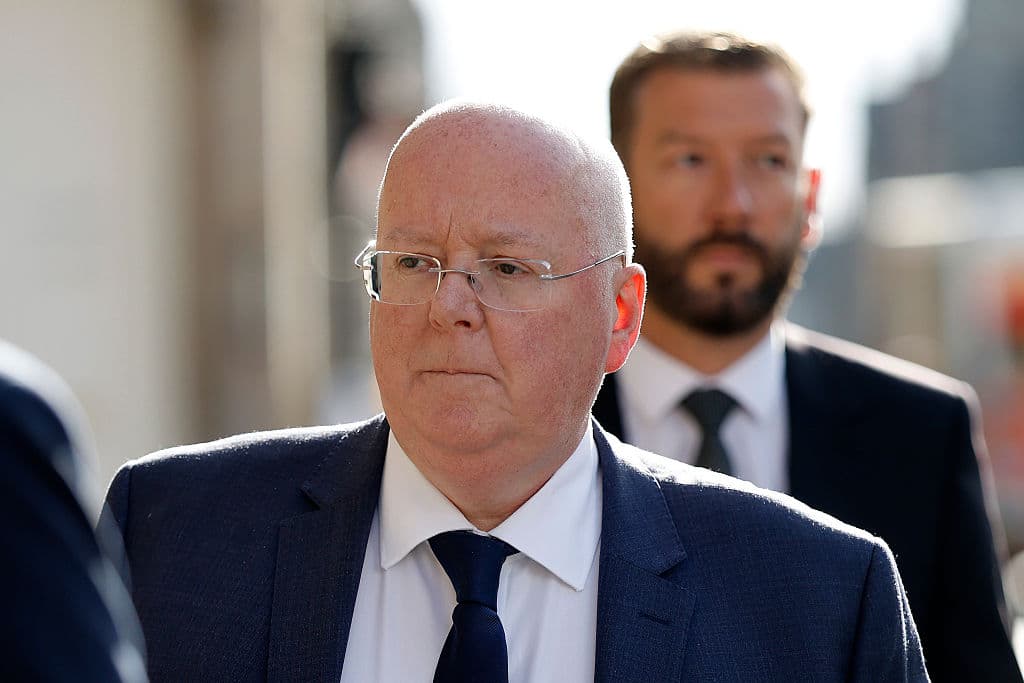
Meanwhile, less than three weeks after polling day, the SNP's former chief executive pled guilty to embezzling £400,000 from the party. Peter Murrell, the former husband of former First Minister Nicola Sturgeon, procured cars, designer bread boxes, toilet seats, and a host of luxury goods with SNP funds over the twelve years spanning the nationalists' meteoric electoral rise.
Murrell's crime constitutes the most egregious example of the cartel politics that gripped Scotland's national movement in the wake of the 2014 independence referendum. Initiated a decade earlier when Swinney sought to "New Labourize" the SNP, this process relegated members to mere spectators and centralized power within the narrow ranks of the party's leadership — a dynamic compounded by the fact that the Scottish government and the country's ruling party were run from the same house for nine years.
After shirking some of Scotland's biggest challenges and suffering successive bouts of public humiliation, the SNP paid little price but a weakened hold on Scotland's politics. In evading the potentially costly consequences of governmental failure, the party was aided by its constitutional opponents.
A four-way split in unionist support between Scottish Labour, the Liberal Democrats, the Conservatives, and Reform UK saw Swinney's SNP retain some seats with less than one-third of the vote. The outcome, then, is not one that will meaningfully reinvigorate the debate surrounding Scotland's national question.
While the success of the Scottish Green Party saw Scotland elect its largest-ever cohort of independence-supporting MSPs, the SNP fell short of the parliamentary majority that the party's leadership stipulated was necessary to precipitate a second referendum — not that this will be of much concern to Swinney. The result leaves the first minister, himself a committed gradualist, in a comfortable political position.
Under little to no pressure to accelerate its nonexistent independence campaign, the SNP can enjoy the fruits of public office for a further five years before returning to its electorate with a ready-made pitch for a majority. In this sense, the May 7 election was Groundhog Day — and not just for Scotland's largest party.
Scottish Labour's support and parliamentary representation fell for the fifth successive Holyrood election as it lost 24 percent of its previous vote. Having run a presidential campaign around leader Sarwar, who boasts a net favorability rating of -40, Labour was reduced to just seventeen seats and forced to concede the election after less than 10 percent of results had been declared. While defenders of Scottish Labour's right-wing leadership have sought to pin its defeat on Starmer's disastrous first eighteen months as prime minister, this was a humiliation made in Scotland.
In an effort to emulate the success of Zohran Mamdani's New York City mayoral campaign, Scottish Labour sought to adopt his communications strategy. Smiley "walk and talk" videos, retro American fonts, jazzy music, and jumping camera shots peppered its social media feeds. The problem for Sarwar was that Mamdani's victory didn't just rest on a firm grasp of the digital realm but on a material offer to New York's electorate and an army of activists ready to communicate it. Labour in Scotland had neither and, consequently, proved incapable of laying a glove on a government that first took power nineteen years ago.
The SNP's return to power will see the party pick up where it left off. In January, the outgoing finance secretary, Shona Robison, announced a raft of "efficiency savings" to plug Scotland's £5 billion fiscal black hole. These included plans to cut at least 11,000 public sector jobs. Unable to conceive of a political alternative, opposition candidates of all stripes failed to politicize this austerity agenda during the election campaign. Nonetheless, with the SNP in need of additional votes to pass legislation, this so-called "reform" strategy presents an unwelcome test for Scotland's new politicians.
The Scottish Greens, who returned a record result with the aid of Zack Polanski's high-profile and articulate interventions south of the border, will no doubt be tempted to extract concessions from Swinney's government. The party, which is entirely independent of the Green Party of England and Wales, did so at the cost of supporting budget cuts and privatization during the last parliament.
It remains to be seen whether they impose stricter red lines and pivot left over the coming months in order to align more closely with Polanski's "eco-populism." Meanwhile, if Reform UK, which won seventeen MSPs and 16 percent of the regional vote, were to support such drastic cuts, it may strike an important blow against their claim to speak for Scotland's "forgotten working class."
Alluring as the twilight of the British state may be, the Scottish election result signals anything but a new dawn for the cause of independence. Instead, Holyrood looks set to embark on a familiar course of managed decline. Now that the populist right have a foothold in Edinburgh for the first time, an obligation befalls the Scottish left to ensure Reform UK is not the beneficiary of the reaction.