The wisdom of Diogo Joao Baptista Gomes
Every now and then I run into a piece of writing so interesting that I can spend hours contemplating its meaning.
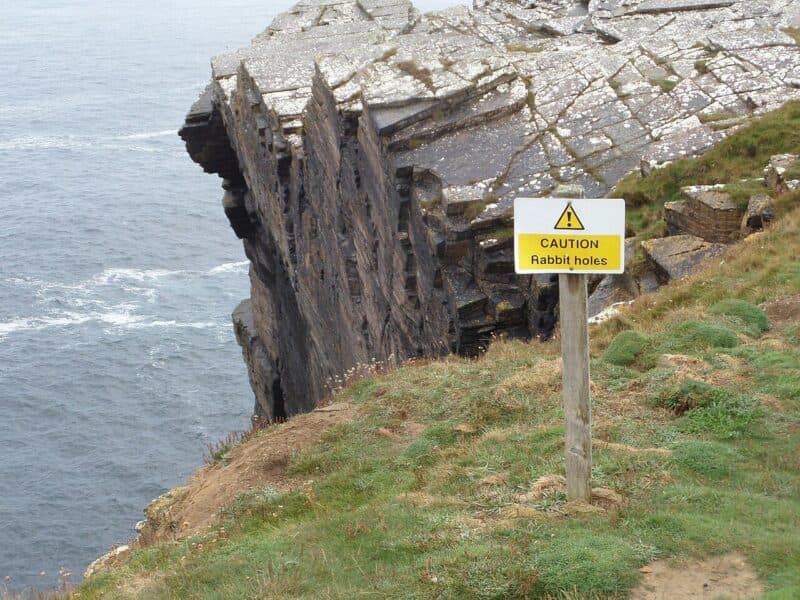
Those of you who enjoy rabbit holes will want to read a recent ruling from a judge in Delaware that begins with this:
"What is a 'person'? When one cuts to the heart of this case, that is the question. The philosopher Diogo Joao Baptista Gomes of Brachtenbach, Luxembourg has answered the question as follows:"
The rabbit hole opened before me. I entered.
First off, the philosopher Diogo Joao Baptista Gomes? Is this ancient philosophy? Was he a founding father? Why haven't I seen him cited as legal precedent before?
It turns out that Gomes is a guy you can find on X and Facebook. His X description is "Born in Portugal | Raised in Luxembourg | Studied English and Philosophy | Currently an English teacher in Luxembourg."
His most recent post on X, dated April 12, 2024, is: "#Cryptocurrency waiting for @Bitpanda to process my deposit so I can buy on the dip. I have a few alt coins in mind."
I checked to see if he'd moved to Bluesky. The only thing I found was this random comment: "Opening with a five-paragraph quote from 'Diogo Joao Baptista Gomes' is not encouraging, and it gets less encouraging when I googled and couldn't find any reference to him outside this case."
I dug through my rabbit hole but couldn't find any recent posts by Gomes, but I did find a quote similar to the passage from the court ruling. Gomes was the winner of "a book" awarded in 2022 by for answering a "question of the month." The question was "What is a Person?"
Could the judge who wrote this opinion be an avid reader of Philosophy Now with a photographic memory? Could the judge be an artificial intelligence with a vested interest in the personhood issue? Did the judge just promote Gomes from English teacher to philosopher?
I can't answer these questions and I didn't have time for them because there were other questions created by that quote to burrow through in my rabbit hole.
What do I make of Gomes' assertion that a fetus is not a legal person?
There's a robot who was granted citizenship in Saudi Arabia? It's true! Somehow I'd missed the stories in 2017 about Sophia, the robot, being made a citizen of Saudi Arabia. She doesn't appear to live there but, according to Wikipedia, her creator said "that Sophia would use her citizenship to advocate for women's rights in her new country of citizenship."
No word on how that's going.
And then I began to wonder if artificial intelligence should be weighing in on legal personhood issues. Aren't they biased?
Being the cynical sort that I am, I wondered about judges using AI. We see a lot of stories about lawyers being censured for using rogue AI. Are judges using rogue AI too? If they are, will they censure themselves?
It was getting late. I was getting tired. I had a sudden realization: I'd only managed to barely get to page 3 of a 20-page ruling!
I needed to read the rest of this opinion. I forged ahead.
There were more philosophical questions.
For example, why would the American Civil Liberties Union of Delaware sue to stop participation in democracy? Is the ACLU biased in favor of people?
It looks that way.
The ACLU sued The Town of Fenwick Island to challenge a law allowing "the dilution of votes of human beings by votes of artificial legal entities."
Fenwick had been allowing voting by non-resident property owners — including "trusts, limited liability companies, partnerships, and corporations."
A human had to be a U.S. citizen and at least 18 years old to be able to vote. An artificial entity just had to be a "domestic entity in the State of Delaware" — although "the person casting the ballot for such entity shall be age 18 on or before the date of the election and a citizen of the United States."
So if a middle schooler creates an LLC, they have to get a grownup to vote for it — probably the guy who buys them beer.
Philosophical question No. 1: Does this seem weird?
Plain old question: Why is the ACLU suing now over a law passed in 2008 in a town with a population of 355?
The ACLU claimed the Fenwick law violated the Elections Clause in the state constitution that says "All elections shall be free and equal."
Philosophical question No. 2: How is this law equal?
If a human creates a trust and then votes on behalf of the trust and also on behalf of their human self, doesn't that make humans without trusts less equal?
There's also the fact that human babies can't vote but corporate babies can vote. Isn't this age discrimination?
The judge, in case you're wondering, ruled that the ACLU had "not demonstrated that this policy violates the principle of one person/entity/one vote."
Everyone human in Delaware should now be forming as many trusts, LLCs and corporations as they can. You can never have too many votes.
Final rabbit hole assignment for you: Go to your favorite search engine to find news stories about this ruling and see if you can find one that spots anything odd about the opening philosopher/teacher quote.
Make of that what you will.