Vanuatu turns to world court in Pacific islands ownership fight with France
The small island nation wants the top U.N. court to decide who can claim two remote islands and draw the surrounding sea border. But France has to agree first.
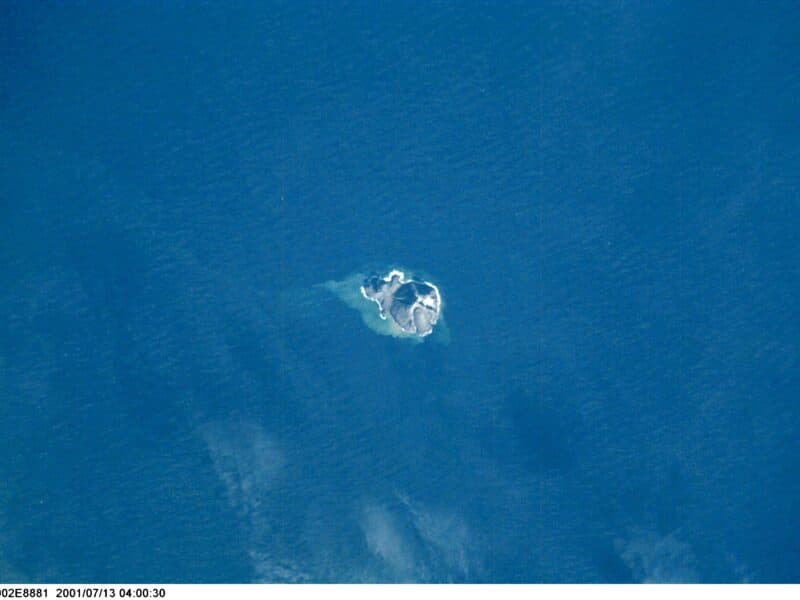
THE HAGUE, Netherlands (CN) — Two tiny Pacific islands put Vanuatu and France before the United Nations' top court Monday, but France gets to decide whether the doors open.
Vanuatu applied to the International Court of Justice on Monday, asking the judges to determine who owns Umaenupne, also known as Matthew Island, and Umaeneg/Leka, or Hunter Island. The South Pacific island nation, home to about 336,000 people, also wants a single maritime boundary separating the countries' exclusive economic zones and continental shelves around Vanuatu and New Caledonia.
The filing has reached the courthouse, but not the courtroom. Vanuatu used a procedure that depends on France agreeing to let the judges hear the dispute. The court's rules state: "It shall not however be entered in the General List, nor any action be taken in the proceedings, unless and until the State against which such application is made consents to the Court's jurisdiction for the purposes of the case."
The court has sent the application to France. The French government did not respond to a request for comment.
Created under the United Nations Charter in 1945, the International Court of Justice settles legal disputes between countries and advises authorized United Nations bodies on questions of international law. Its 15 judges sit at the Peace Palace in The Hague.
For much of the 20th century, Vanuatu was called the New Hebrides and jointly administered by Britain and France. When the country gained independence in 1980, one question remained unresolved: Who owns two remote uninhabited islets to its south?
Vanuatu claims the islands under the names Umaenupne and Umaeneg/Leka, while France calls them Matthew and Hunter and regards them as part of New Caledonia. The rival claims have prevented the countries from fixing their maritime boundary, creating legal uncertainty for fishing and scientific research, according to a February 2026 response from France's Foreign Ministry.
Diplomatic efforts have so far produced no agreement. The countries held boundary talks in 2018 and 2019, then pledged in July 2025 to resume negotiations and seek an amicable solution. France's foreign minister reaffirmed Paris' claim to the islands in June 2026.
Exclusive economic zones and continental shelves determine rights over marine resources and the seabed, which is why Vanuatu wants the judges to settle the island and maritime questions together. Vanuatu is about 1,090 miles east of northern Australia.
For now, no hearing is scheduled and there is no judgment to appeal. France faces no deadline to respond, leaving the application at the court's door unless and until Paris agrees to let the judges hear it.
Courthouse News reporter Eunseo Hong is based in the Netherlands.